
Pure desi cow ghee is fundamentally different from refined oils, butter, and other cooking fats due to its unique fat composition, preparation method, and how the body digests it. Unlike refined oils, which are chemically processed and stripped of nutrients, desi cow ghee made through traditional bilona churning contains butyric acid, fat-soluble vitamins (A, D, E, and K), and antioxidants that actively support digestion, immunity, and heart health. It has a higher smoke point (450–485°F) than most cooking oils, making it safe for high-heat Indian cooking. Most importantly, 96% of pure desi cow ghee is digested compared to lower absorption rates for other fats, which is why it's been used in Ayurvedic medicine for thousands of years.
Understanding Fat: Why Type Matters More Than Amount?
Most people think all fats are the same. They're not. The human body doesn't process coconut oil the same way it processes desi ghee, and refined sunflower oil behaves completely differently from butter. When you choose pure desi cow ghee, you're selecting a fat that your digestive system evolved to recognize and utilize efficiently. Here's why this distinction is critical: your gut bacteria, your liver, your brain, and even your immune system depend on the type of fat you consume. The wrong fats create inflammation. The right fats, like those in desi cow ghee vs other fats, actively repair your gut lining and improve nutrient absorption.
What Pure Desi Cow Ghee Actually Contains?
Pure desi ghee isn't just fat. It's a complex nutrient package that refined oils simply don't offer.
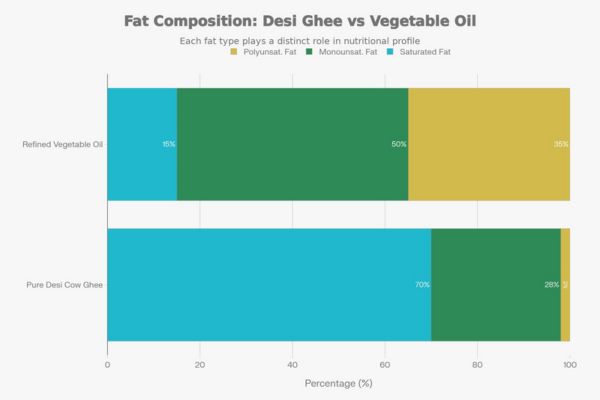
Fat Composition Breakdown:
- Saturated fat (69%–71%): Not the enemy—these are short-chain saturated fats that fuel your mitochondria and stabilize cell membranes
- Monounsaturated fat (28%): The same heart-healthy fat found in olive oil
- Polyunsaturated fat (1%): A minimal amount, which is ideal for avoiding inflammatory imbalances
- Butyric acid (3–4% of total fat): A short-chain fatty acid that repairs your gut lining, feeds beneficial gut bacteria, and reduces inflammation throughout your digestive system
Vitamins and Bioactive Compounds:
- Vitamin A: 10% of daily value per tablespoon (supports vision, skin, and immunity)
- Vitamin D: Essential for bone health and immune function
- Vitamin E: 11% of daily value (powerful antioxidant)
- Vitamin K: Supports blood clotting and bone metabolism
- CLA (Conjugated Linoleic Acid): Supports metabolic health, especially from grass-fed desi cows
- Antioxidants: Protect cells from oxidative damage
Refined oils? They're stripped of almost all of this during processing. Vegetable oil is 99% fat with virtually no vitamins or functional compounds. Butter contains some nutrients but lacks the therapeutic concentration of butyric acid that makes desi ghee unique.
Pure Desi Cow Ghee vs. Refined Oils: The Critical Differences
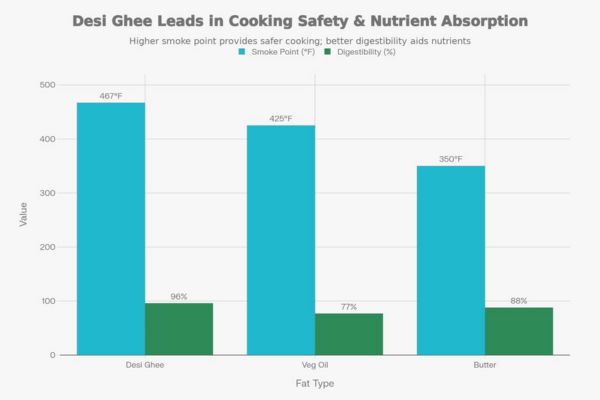
What This Means for Your Cooking: When you heat refined vegetable oil beyond 400°F, it breaks down into harmful compounds called free radicals and aldehydes. These oxidized compounds enter your bloodstream and can damage cells, contributing to inflammation, heart disease, and accelerated aging. Pure desi cow ghee, on the other hand, becomes more stable when heated. Its molecular structure is designed by nature to withstand high temperatures. This is why traditional Indian cooking uses ghee for tempering (tadka), deep frying, and sautéing. It's not just tradition—it's biochemistry.
Why Preparation Method Matters: Traditional Bilona vs. Industrial Processing?
Not all ghee is the same. The way ghee is made determines whether it retains its medicinal properties or becomes just another processed fat.
Traditional Bilona Method (What Makes It Pure):
The bilona process is ancient, mentioned in Ayurvedic texts over 5,000 years old. Here's how it works:
- Fresh milk from desi cows (like Gir or Sahiwal) is collected
- The milk is heated and cooled slowly to create yogurt (curd)
- The curd is hand-churned using a wooden dasher (bilona)
- As the curd is churned, butter naturally separates from the buttermilk
- This butter is gently heated over low flame for several hours
- The water and milk solids gradually evaporate, leaving behind pure ghee
- The ghee is carefully filtered to remove all solid particles
Why This Matters:
The slow, low-heat process preserves heat-sensitive nutrients like vitamins, butyric acid, and antioxidants. The hand-churning action ensures even distribution of beneficial compounds. The entire process takes 12–24 hours, which is why traditionally made ghee costs more — but also why it works.
Industrial Processing (What Loses the Magic):
Factory-made ghee often uses high-speed centrifuges that generate heat and damage nutrients, separated butter from large-scale dairy operations (often from A1-producing foreign breeds), chemical clarification processes that may leave residues, quick heating that destroys fat-soluble vitamins, and sometimes the addition of vegetable oils or other fats to stretch the product.
How Your Body Digests Desi Cow Ghee Differently?
This is where pure desi cow ghee truly shines. Your digestive system doesn't just process it,it thrives on it.
96% Digestibility:
Research shows that nearly 96% of pure desi cow ghee is absorbed and utilized by your body. Compare this to:
- Refined vegetable oils: 70–85% absorption
- Butter: 85–90% absorption
- Other animal fats: 75–88% absorption
This higher absorption rate means your body gets maximum nutrition from smaller quantities. A tablespoon of desi ghee provides more usable nutrition than larger amounts of other oils.
The Butyric Acid Advantage:
Butyric acid is a short-chain fatty acid that is produced naturally when beneficial gut bacteria break down fiber. However, most people don't produce enough butyric acid through diet alone, especially if they're eating processed foods and refined oils.
Pure desi cow ghee provides butyric acid directly, which:
- Repairs the intestinal lining damaged by inflammation
- Feeds beneficial bacteria like Faecalibacterium prausnitzii (linked to immune health)
- Reduces intestinal permeability ("leaky gut")
- Improves nutrient absorption from all other foods
- Supports healthy serotonin production (70% of your serotonin comes from your gut)
Refined oils don't contain butyric acid at all. Butter contains small amounts, but the butter fat coat in the digestive tract can reduce the absorption of this beneficial compound.
Fat-Soluble Vitamin Absorption:
Vitamins A, D, E, and K are fat-soluble, meaning they need fat to be absorbed. Desi ghee is literally designed to carry these vitamins throughout your body. When you eat a salad with spinach (vitamin K) or carrots (vitamin A), adding a teaspoon of desi ghee to your cooking dramatically increases how much of these vitamins your body actually absorbs.
Refined oils can carry fat-soluble vitamins, but they lack the additional bioactive compounds (like antioxidants) that make desi ghee uniquely therapeutic.
Is Pure Desi Cow Ghee Suitable for Daily Cooking?
Absolutely. In fact, it's the ideal daily cooking fat for most people.
Recommended Daily Amount:
- 1–2 tablespoons daily for most adults
- ½–1 tablespoon for children and elderly
- Up to 35g (about 3 tablespoons) daily supports energy and nutrition in active individuals on a vegetarian diet
Best Uses:
- Tempering spices (tadka) for dals and curries
- Deep frying and sautéing vegetables
- Topping cooked foods (adds flavor and aids digestion)
- Mixed into soups and warm milk for enhanced nutrient absorption
- Cooking traditional Indian breads
Who Benefits Most:
- People with digestive sensitivities
- Vegetarians seeking fat-soluble vitamins
- Athletes and physically active individuals
- Anyone over 40 (digestion naturally weakens with age)
- Parents seeking nutrient-dense foods for children
Who Should Be Careful:
- People with existing heart conditions should consult their doctor (though research suggests moderation with desi ghee is cardioprotective)
- Those on strict calorie-restricted diets should use measured portions
- People allergic to milk proteins (note: pure ghee is casein-free, but traces may remain)

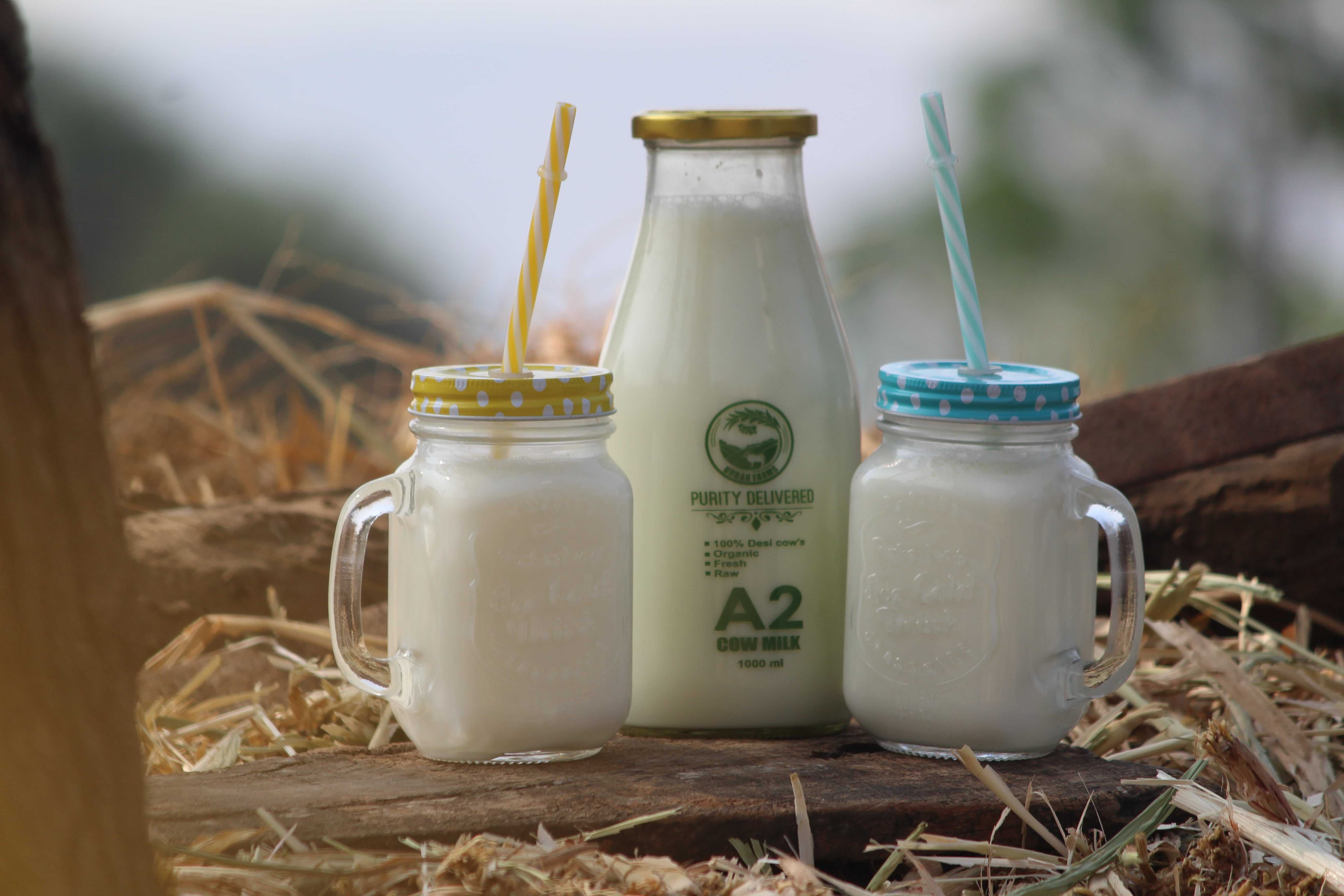
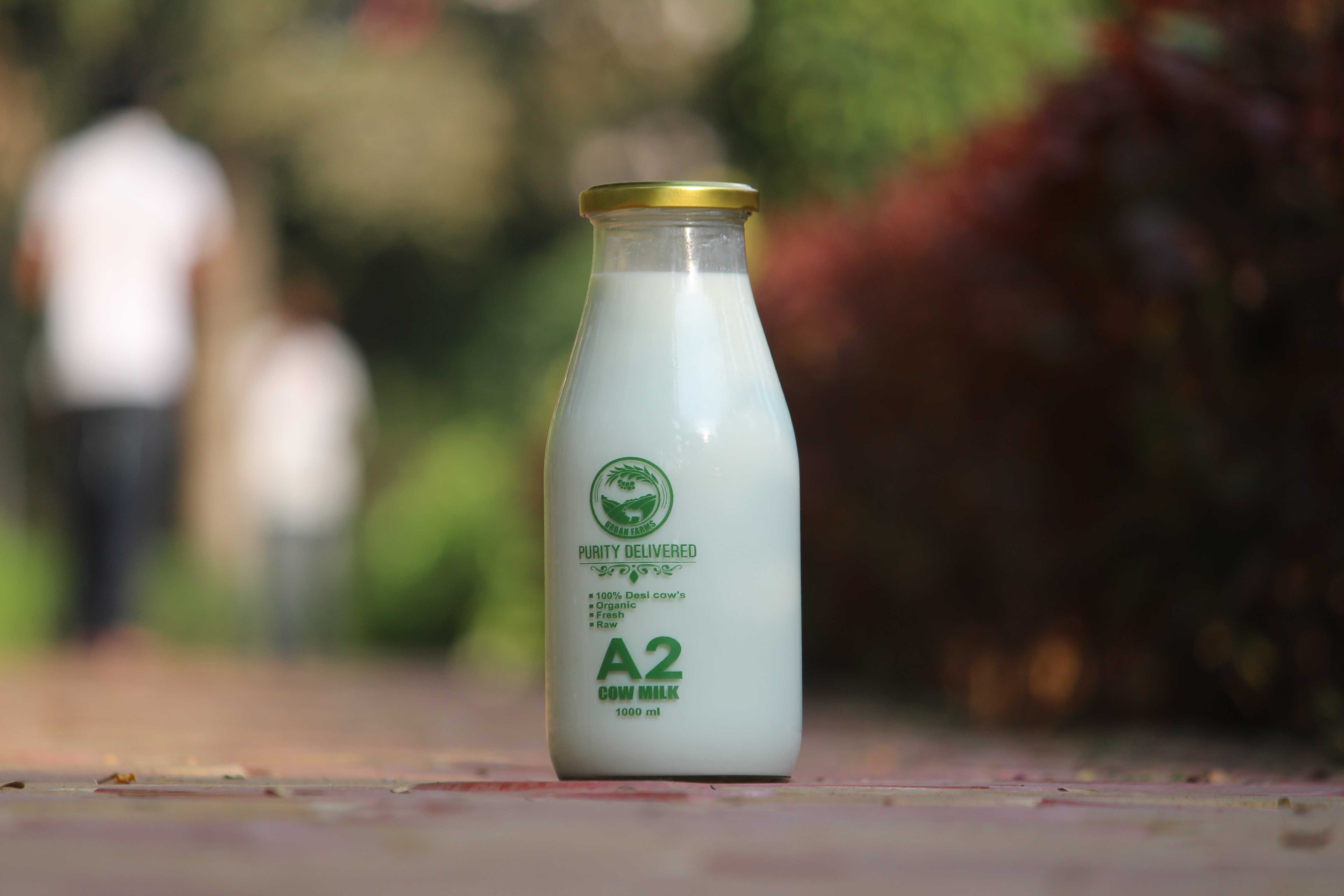
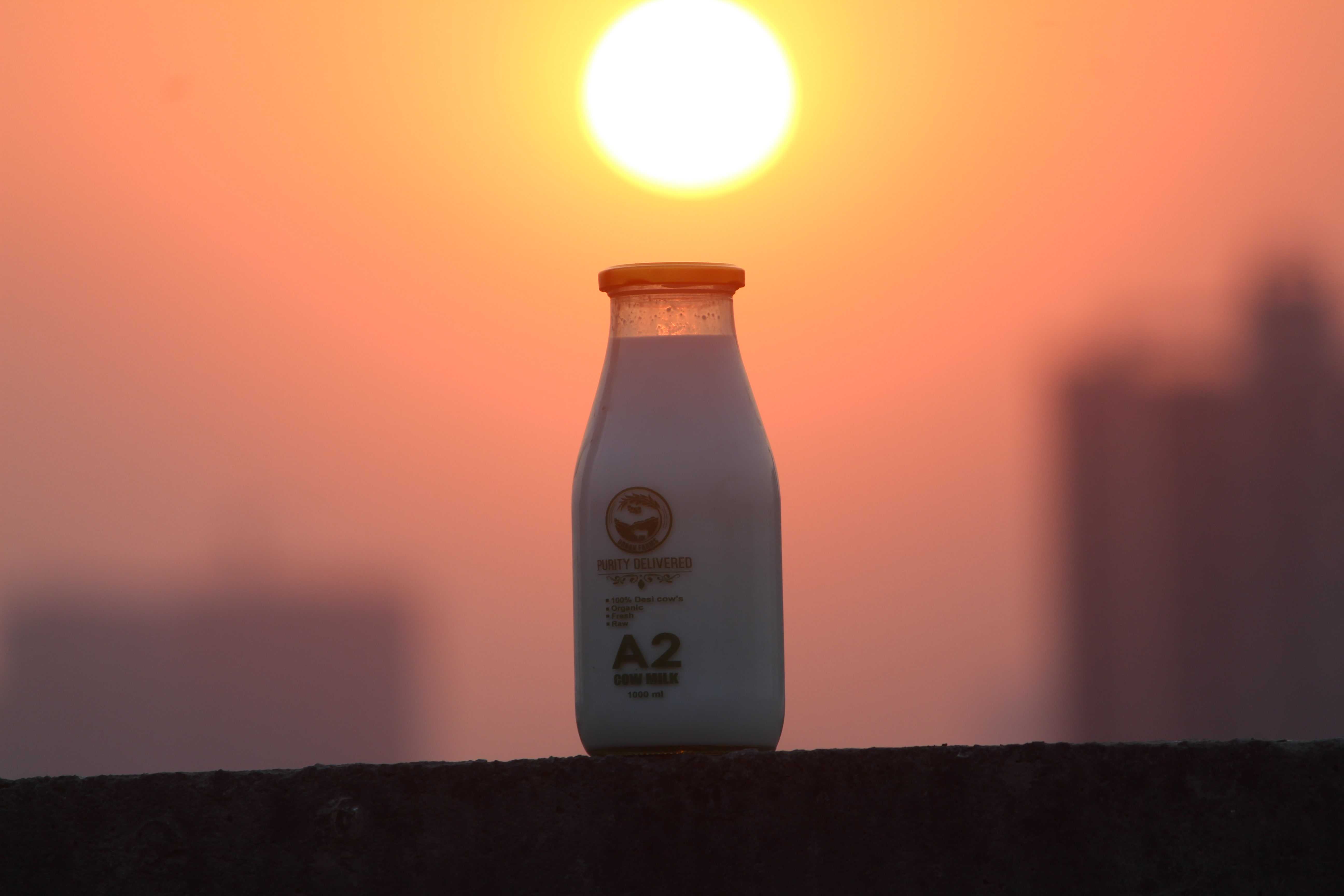
Instantly Homogenized, Pasteurized, chilled and packaged farm fresh milk - Urban Farms Milk. Daily Fresh Home Delivery Premium Pure A2 Milk in Pune Providing a high-quality, hygienic and nutritious product




Leave A Comment